Furniture upholstery involves more than replacing old fabric. A proper upholstery project starts with an inspection and continues through material selection, repairs, fabric preparation, fitting, and final finishing. Each stage affects the appearance, comfort, and use of the finished furniture.
Whether you want to refresh an old sofa, update dining chairs, or restore a valuable piece, understanding the upholstery process helps you know what to expect. Here is how professional furniture upholstery works from the first consultation to installation.
1. Furniture Inspection and Consultation
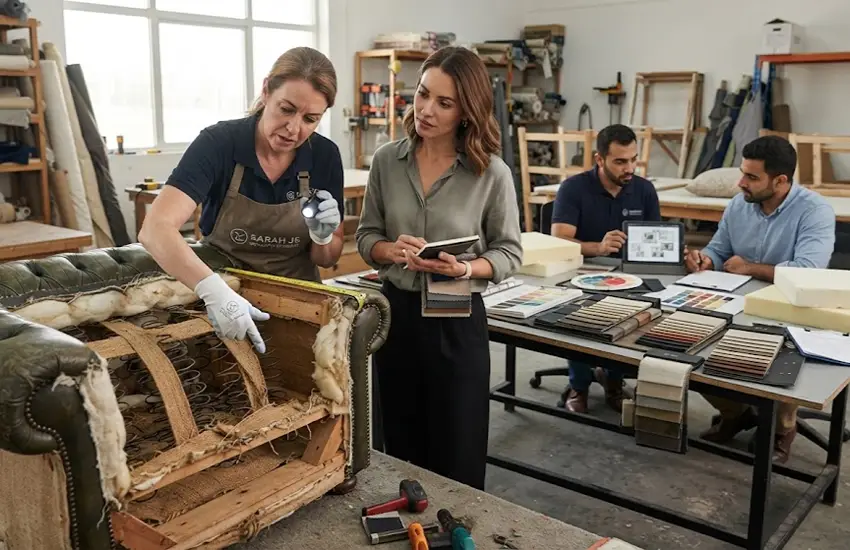
The process usually starts with an inspection of the furniture. The upholstery team checks the frame, existing fabric, padding, springs, webbing, cushions, and other structural components.
This stage helps identify problems hidden beneath the outer fabric. A sofa might look worn because of faded upholstery, but the inspection could also reveal loose joints, damaged webbing, sagging springs, or worn foam.
The team also discusses your preferred style, colour, fabric type, comfort level, and budget. This information helps determine the right approach for the project. Furniture Upholstery Dubai offers consultations and furniture assessments before preparing a quotation.
2. Choosing the Upholstery Fabric
Fabric selection is one of the most important parts of the project. The right material should suit both the furniture and the way you use it.
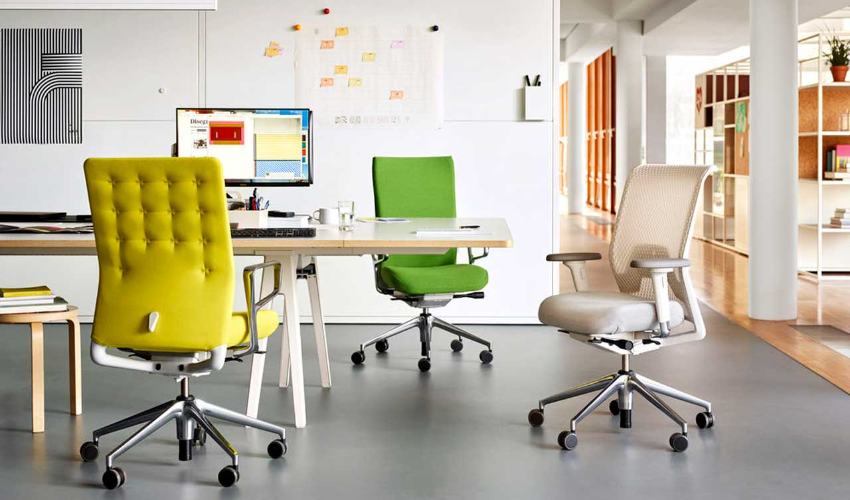
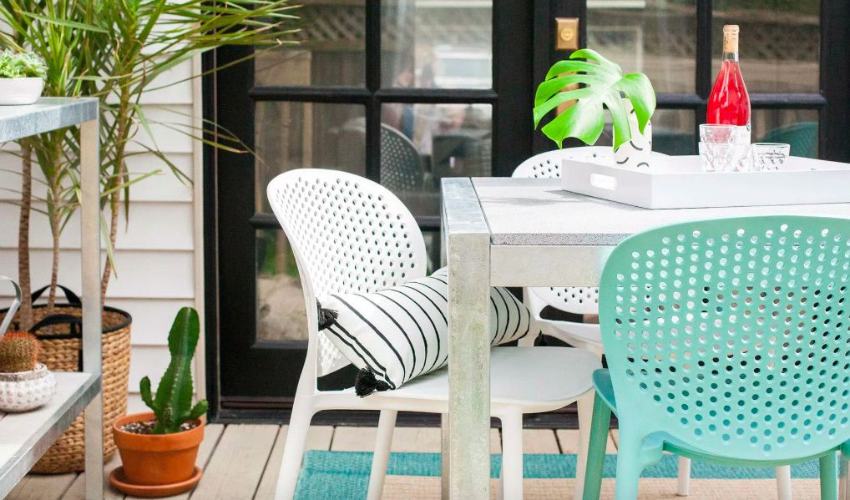
For example, a family sofa used every day needs a different fabric from an occasional accent chair. High-use furniture often benefits from durable synthetic or performance materials. Decorative pieces offer more flexibility with textures, patterns, and finishes.
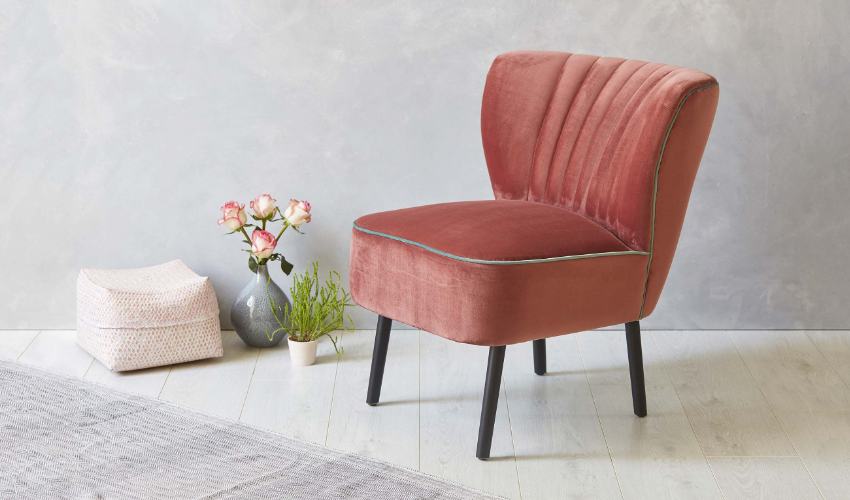
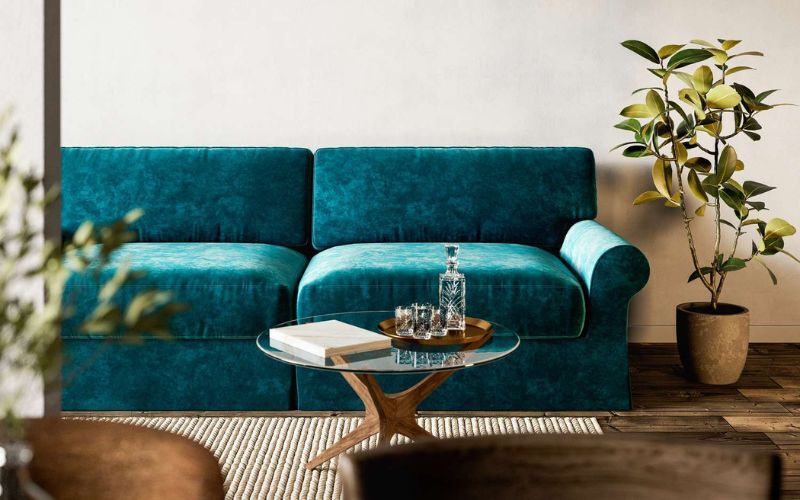
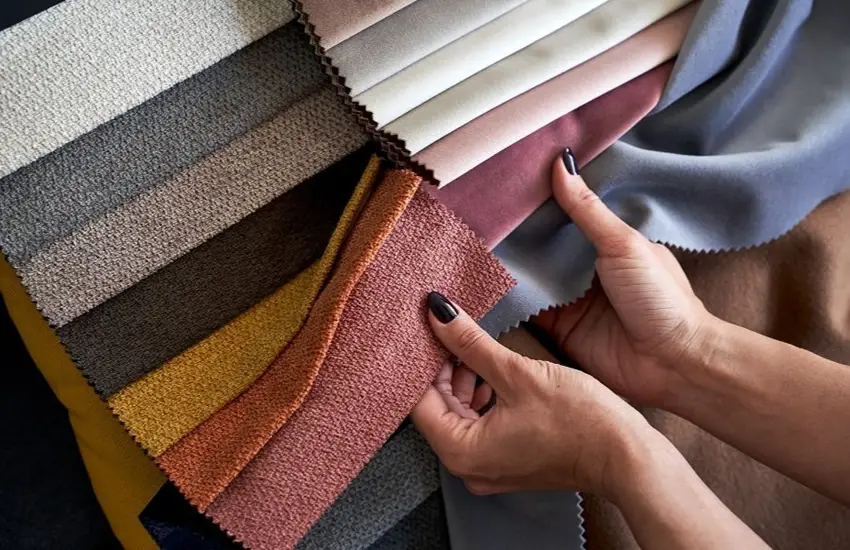
Common options include cotton, linen, velvet, chenille, polyester, microfiber, leather, and performance fabrics. Each has different characteristics in terms of texture, appearance, cleaning, durability, and maintenance.
Before making a decision, request fabric samples. Viewing the material in your own room helps you compare colour and texture with your flooring, walls, curtains, and other furniture.
You can also explore the available Upholstery Fabric collections to compare different materials, colours, patterns, and textures.
3. Removing the Old Upholstery
Once the materials and project details are confirmed, the old upholstery is removed.
Professionals carefully strip away the existing fabric, padding, foam, and other worn materials. Removing the old covering exposes the furniture frame and makes it easier to identify structural problems.
The original fabric pieces also provide useful measurements and patterns. These pieces help the upholsterer understand how the new material needs to be cut and positioned.
Careful removal matters because unnecessary damage to the frame or other components could complicate the restoration process.
4. Inspecting and Repairing the Frame
After removing the old covering, the frame receives a closer inspection.
Wooden frames are checked for cracks, loose joints, weakness, or other damage. Depending on the furniture, professionals might also inspect springs, webbing, support structures, and connecting points.
Repairs are completed before new upholstery is installed. This approach helps address structural issues instead of covering them with new fabric.
The current upholstery process includes frame inspection and repair, along with spring and webbing repairs where required.
5. Replacing Foam, Padding, and Support Materials
The next stage focuses on comfort and support.
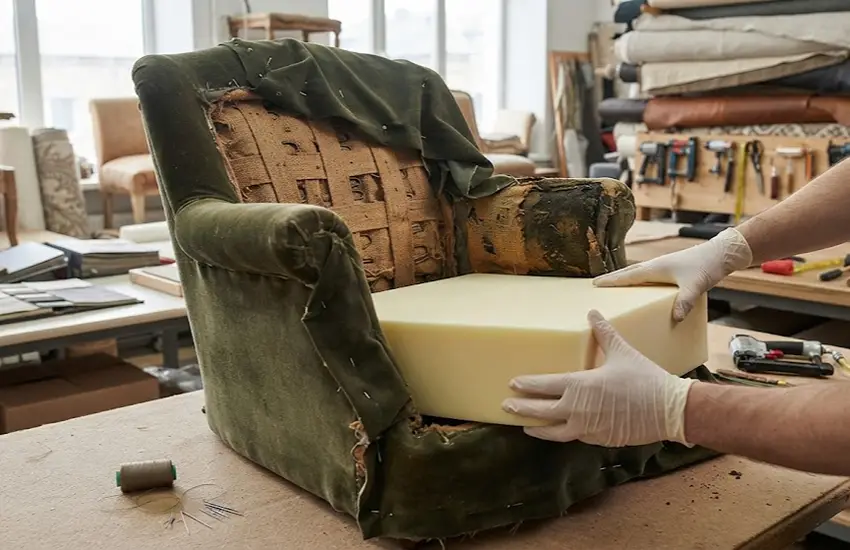
Old or compressed foam might no longer provide the required firmness. Worn padding can also affect the shape of cushions and seating areas.
Depending on the furniture, the upholstery team might replace foam, padding, springs, webbing, or cushion filling. Foam options include different densities and materials, so the choice should match the furniture design and desired level of comfort.
This stage is particularly important for sofas and chairs because the internal materials affect how the furniture feels when you sit on it.
6. Measuring and Preparing the New Fabric
After the furniture structure and padding are ready, the new fabric is prepared.
The upholsterer uses measurements and existing fabric pieces as guides. The new material is carefully marked and cut to fit each furniture section.
Patterns require additional attention. Stripes, geometric designs, florals, and other repeating patterns need proper alignment across cushions, arms, backs, and other visible sections.
The cutting stage also needs to account for seams, corners, curves, piping, and other details.
7. Sewing and Installing the New Upholstery
Once the fabric pieces are prepared, they are sewn and fitted to the furniture.
The upholsterer positions the material carefully and works across the frame to achieve a smooth, even finish. Fabric needs to remain properly aligned without unwanted folds or excessive tension.
The new covering is then secured to the frame using the appropriate installation method. Cushions and removable components are covered separately where required.
Professional fitting also helps maintain the original shape of the furniture while giving it a refreshed appearance. The site’s current process describes fabric cutting, stitching, stretching, and stapling as part of the installation stage.
8. Adding Piping, Tufting, and Decorative Details
Upholstery is also an opportunity to update the design. Depending on the furniture, you might add piping around cushions and edges, decorative buttons, tufting, contrasting fabrics, or other finishing details.
These elements need careful placement because small inconsistencies are easy to notice on finished furniture. If you want a modern appearance, simple lines and minimal detailing might work well. Traditional furniture often suits decorative piping, tufting, or more detailed finishes.
9. Final Inspection and Installation
The final stage involves checking the completed furniture.
The team checks the fabric, seams, corners, cushions, piping, and decorative details. They also check the overall shape and finish before the furniture leaves the workshop or is delivered.
For larger furniture pieces, pickup and delivery services make the process easier. The current service includes furniture pickup and delivery options for upholstery projects.
If you are considering sofa reupholstery in Dubai, discuss the condition of your sofa before choosing the fabric. The team can assess whether the project needs fabric replacement alone or additional work such as foam replacement, spring repairs, or frame restoration.
Reasons to Choose Furniture Upholstery
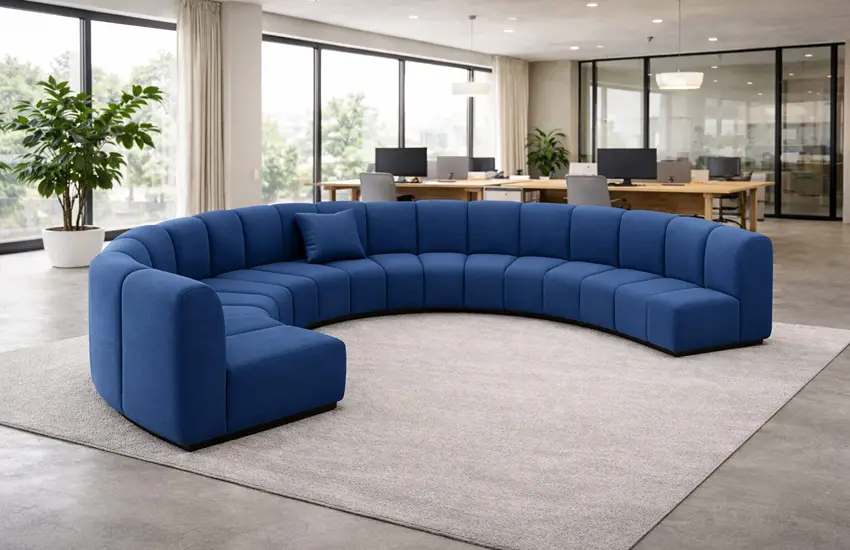
Reupholstery offers an alternative to replacing furniture when the existing piece still has a suitable structure.
You might choose upholstery to:
- Update an outdated colour or pattern
- Replace worn or damaged fabric
- Improve seating comfort
- Restore cushions and padding
- Repair damaged frames or support systems
- Match furniture with a redesigned interior
- Preserve a valuable or sentimental furniture piece
Reduce the need to replace usable furniture
The right approach depends on the condition of the furniture, your preferred design, and the required level of restoration. For more guidance, explore the Reason to choose furniture upholstery before deciding whether reupholstery suits your project.
Final Thoughts
A professional upholstery project follows several stages, from the first furniture inspection to the final installation. Fabric selection is important, but it is only one part of the process.
A good result also depends on the condition of the frame, quality of foam and padding, accurate measurements, fabric preparation, skilled fitting, and careful finishing.
Before starting your project, discuss the furniture’s current condition, intended use, fabric requirements, comfort preferences, and design goals. This helps the upholsterer recommend an approach suited to your furniture and your space.