If you’re planning to reupholster a sofa or buy new furniture, the leather-versus-fabric question is usually the first decision you get stuck on. Both materials look great in photos, both are heavily marketed, and both have loyal fans. The problem is that most advice online is generic and written for cold climates, not for Dubai’s heat, dust and year-round air conditioning.
This guide compares leather and fabric upholstery the way we actually see them perform in Dubai homes, villas and apartments. We work with both materials every week, so the recommendations here come from real reupholstery jobs, not just theory.
There is no single “better” material. The right choice depends on your household, your budget, how the sofa is used, and how much maintenance you’re willing to do. By the end of this article, you’ll know exactly which one fits your situation.
Quick Comparison Table
Here’s a side-by-side snapshot before we go into detail on each point.
| Feature | Leather Upholstery | Fabric Upholstery |
|---|---|---|
| Appearance | Sleek, luxurious, formal look | Wide range of textures, colours and patterns |
| Comfort | Firm feel, can feel cool or warm to touch | Soft, cosy, better temperature balance |
| Durability | Very durable if genuine and well maintained | Durable, especially performance fabrics |
| Cost | Higher upfront cost | More budget-friendly options available |
| Maintenance | Wipe clean, needs conditioning | Vacuum and occasional deep clean |
| Pet Friendly | Resists scratches on top grain, but can be clawed | Some fabrics resist snags better than others |
| Child Friendly | Easy to wipe spills | Stain-resistant fabrics handle mess well |
| Lifespan | 8–15 years with care | 5–12 years depending on fabric quality |
| Heat Resistance | Can feel hot and sticky in direct sun | Breathable, stays comfortable in AC rooms |
| Best For | Formal living rooms, offices, statement pieces | Family rooms, bedrooms, villas, casual spaces |
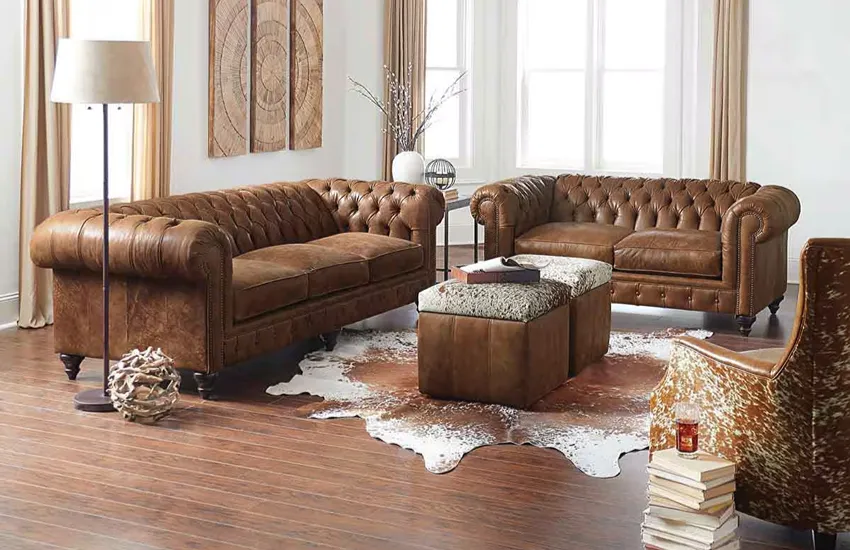
Understanding Leather Upholstery
“Leather” is not one material — it covers several grades, and the grade matters more than the word “leather” itself.
Genuine Leather
Genuine leather is made from real animal hide that has been processed and finished. It’s a broad category that includes several sub-grades below, each with different durability and price points.
Full Grain Leather
This is the highest quality leather, taken from the outer layer of the hide with the natural grain intact. It develops a rich patina over time and is the most durable option, but it’s also the most expensive.
Top Grain Leather
Top grain leather is sanded and refinished to remove imperfections, making it more uniform and slightly more affordable than full grain. It’s a popular middle-ground choice for Dubai sofas because it balances cost with a premium look.
PU Leather (Bonded/Polyurethane)
PU leather is a synthetic coating applied over a fabric or split-leather backing. It looks like leather at first but tends to crack and peel within a few years, especially under strong sun exposure — a real risk in Dubai’s climate.
Faux Leather
Fully synthetic and animal-free, faux leather is the most budget-friendly leather-look option. Quality varies a lot between suppliers, so it’s worth asking your upholsterer which faux leather they use before committing.
Advantages of leather upholstery: a refined, timeless look, easy to wipe down, doesn’t trap dust or pet hair, and genuine leather grades age well and can outlast fabric with proper care.
Disadvantages of leather upholstery: higher cost, can feel hot or sticky in direct sunlight, prone to cracking if it dries out, and lower-grade synthetic leather has a shorter lifespan than most people expect.
Understanding Fabric Upholstery
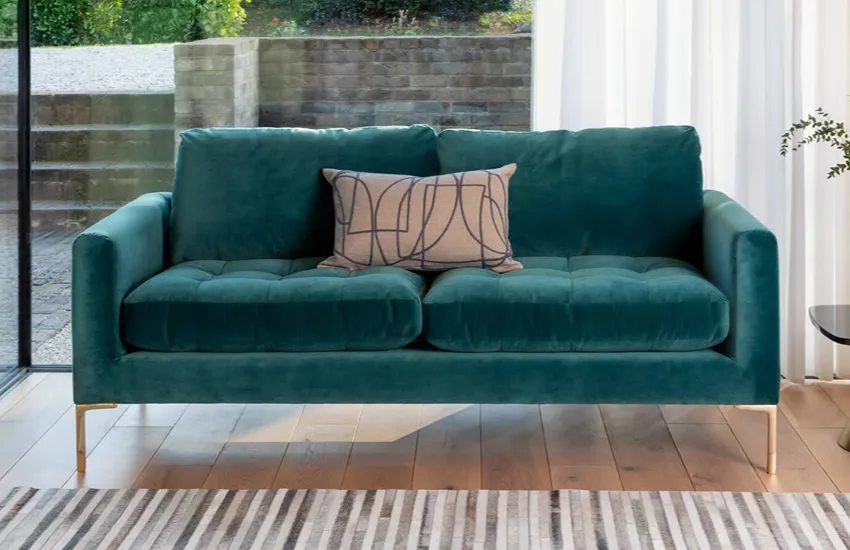
Fabric upholstery covers a much wider range of textures, weaves and price points than leather. Here’s what we typically work with on Dubai sofas.
Cotton
Breathable and soft, cotton is comfortable in air-conditioned rooms but wrinkles easily and isn’t naturally stain-resistant unless treated.
Linen
Linen gives a relaxed, textured, upscale look that suits villa and hotel interiors. It’s less durable than performance fabrics and shows watermarks if not treated properly.
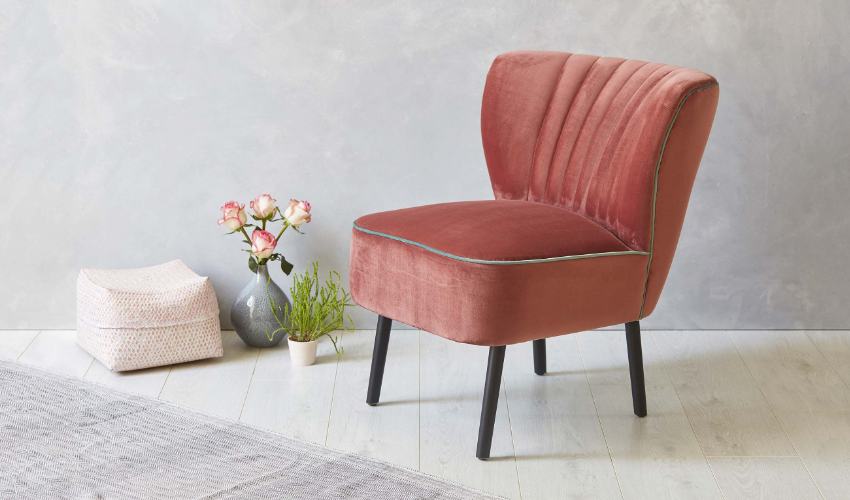
Velvet
Velvet is a popular choice for statement sofas because of its rich texture and colour depth. Quality velvet holds up well, but cheaper versions flatten and shed over time.
Chenille
Chenille has a soft, slightly nubby texture and is known for comfort and decent durability, making it a solid mid-range option for family sofas.
Polyester
Polyester blends are affordable, fade-resistant and widely used in Dubai homes because they hold colour well under strong sunlight.
Microfiber
Microfiber is one of the most practical fabrics for busy households — it resists stains, cleans easily, and stands up well to kids and pets.
Performance Fabrics
These are engineered specifically for stain resistance, durability and easy cleaning. For Dubai homes with children, pets, or frequent guests, performance fabric is usually our top recommendation.
Advantages of fabric upholstery: softer feel, huge range of colours and patterns, generally more affordable, and performance fabrics handle spills and heavy use very well.
Disadvantages of fabric upholstery: can trap dust and allergens if not vacuumed regularly, lower-grade fabrics wear faster, and some fabrics stain more easily than leather.
Leather vs Fabric Comparison
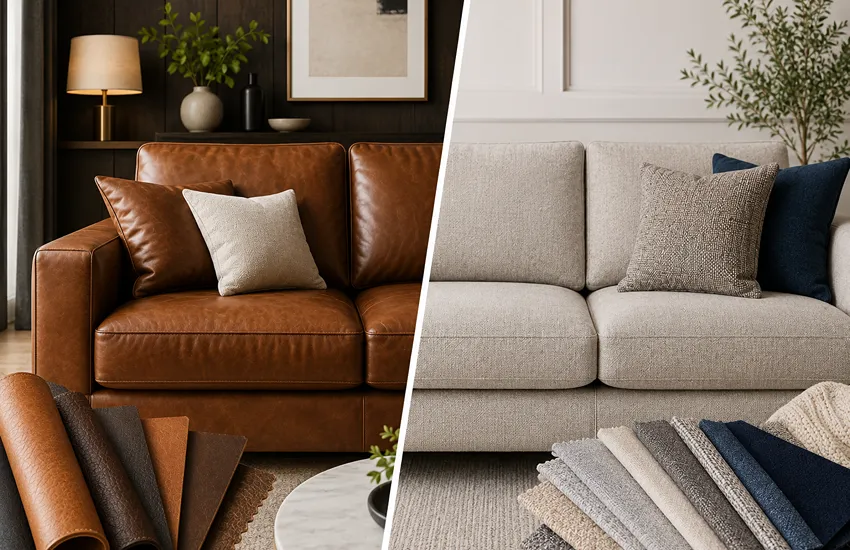
Below is a detailed, side-by-side breakdown of the factors that actually matter when choosing between leather and fabric sofa upholstery.
Durability
Genuine leather, especially full grain and top grain, is the most durable single material when properly conditioned. Performance fabrics come close and, in households with sharp claws or rough daily use, can actually outlast lower-grade leather.
Comfort
Fabric wins here for most households. It stays warmer in cool rooms, doesn’t stick to skin, and softens with use. Leather feels premium but can be less forgiving in extreme temperatures.
Appearance
Leather offers a sleek, formal, modern look that suits contemporary and luxury interiors. Fabric offers far more flexibility in colour, pattern and texture, which is useful for themed or seasonal interior updates.
Maintenance
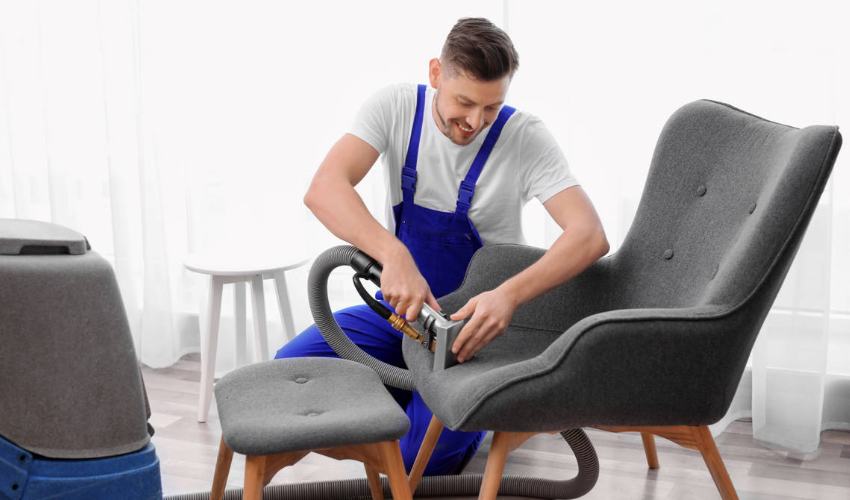
Leather needs occasional conditioning to prevent drying and cracking, but daily upkeep is just a wipe-down. Fabric needs regular vacuuming and occasional professional cleaning, particularly in dusty environments.
Cleaning
Spills wipe off leather almost instantly with no staining risk if cleaned promptly. Fabric, unless treated as a performance material, can absorb spills and require spot cleaning or steam cleaning.
Cost
Genuine leather upholstery typically costs more than fabric, both for new furniture and for reupholstery work. Fabric gives you more control over budget, since there are affordable and premium tiers to choose from.
Lifespan
With proper care, genuine leather can last 8–15 years, sometimes longer. Fabric lifespan ranges from 5–12 years depending on quality, with performance fabrics at the higher end of that range.
Resistance to Stains
Leather is naturally more stain-resistant since liquids sit on the surface rather than soaking in. Performance and microfiber fabrics have closed this gap significantly, making them a strong alternative for stain-prone households.
Pet Friendliness
Leather doesn’t trap pet hair and is easy to wipe, but claws can scratch or puncture it, particularly on lower grades. Tightly woven or performance fabrics resist snagging better and are often the safer choice for homes with cats or energetic dogs.
Family Friendliness
For homes with young children, fabric — especially performance fabric — tends to be more forgiving of everyday mess, crayon marks and juice spills, while still cleaning up well.
Allergy Considerations
Leather is a better option for allergy sufferers since it doesn’t hold dust mites or pet dander the way woven fabric can. If fabric is preferred, tightly woven performance fabrics are easier to keep allergen-free with regular vacuuming.
Environmental Impact
Genuine leather is a by-product of the meat industry, while synthetic leathers and many fabrics are petroleum-based. Reupholstering an existing sofa frame, regardless of material, is the most sustainable option since it avoids manufacturing an entirely new piece of furniture.
Repairs
Leather can be professionally repaired for small cuts, scuffs and colour fading, though visible repairs are sometimes unavoidable on lower-grade leather. Fabric is generally easier and cheaper to patch or partially replace.
Customization Options
Fabric offers far greater customization — colours, patterns, textures and finishes — making it easier to match specific interior styles. Leather customization is more limited but includes different grains, tones and stitching details.
Resale Value
Well-maintained genuine leather sofas tend to hold resale value better, since buyers associate leather with quality and longevity. A freshly reupholstered fabric sofa, however, can also boost resale appeal if the fabric choice is neutral and current.
Best Material for Dubai Weather
Given Dubai’s sun exposure, heat and dust, high-quality performance fabric or top grain leather placed away from direct sunlight both perform well. The deciding factor usually comes down to household lifestyle rather than the climate alone — we cover this in detail in the next section.
Which Upholstery Material Is Better for Dubai’s Climate?
Dubai’s climate puts unique stress on sofa materials that most generic upholstery guides don’t account for.
Heat and direct sunlight cause leather to dry out and eventually crack if it’s not conditioned regularly, and lower-grade synthetic leather is especially vulnerable near south-facing windows. Fabric handles sun exposure differently — colours can fade over time, so solution-dyed or fade-resistant fabrics are worth the extra cost near bright windows.
Humidity is less of an issue indoors thanks to constant air conditioning, but homes that are closed up for long periods (common in second homes or holiday villas) can develop musty odours in fabric if it isn’t ventilated occasionally.
Air conditioning keeps most Dubai interiors cool and dry, which actually works against leather by accelerating moisture loss from the material. This is why leather sofas in Dubai homes need conditioning more often than the same sofa would in a humid climate.
Dust and fine sand are a daily reality here, and they settle into woven fabric more than they do on leather’s smooth surface. If your home is near a construction site or a main road, leather or tightly woven performance fabric will be easier to keep clean long-term.
Our practical recommendation: keep leather sofas away from direct window sun and condition them every few months, and choose performance or solution-dyed fabric for any sofa placed near windows or in high-traffic rooms.
Which Upholstery Is Better for Different Lifestyles?
The “right” material also depends heavily on who is using the sofa and how.
- Families with kids: Performance fabric or microfiber — easy to wipe, forgiving of mess, and comfortable for everyday use.
- Pet owners: Tightly woven performance fabric or thick top grain leather — both resist damage from claws better than soft fabrics or thin leather.
- Luxury villas: Full grain or top grain leather, or premium velvet and linen — these suit formal, statement living areas.
- Rental apartments: Durable, neutral-coloured fabric — cost-effective to maintain and easy to refresh between tenants.
- Airbnb properties: Stain-resistant performance fabric or PU leather — built to handle frequent guest turnover and heavier wear.
- Offices: Leather or heavy-duty fabric — both hold up under daily use and project a professional image.
- Hotels: Commercial-grade leather or fire-rated performance fabric — chosen for durability, easy cleaning and compliance with hospitality standards.
Popular Upholstery Fabrics We Recommend
After years of reupholstering sofas across Dubai homes, a handful of fabric types consistently perform best. We recommend microfiber and performance-woven blends for busy family homes because they resist staining and hold up to daily use without losing their texture.
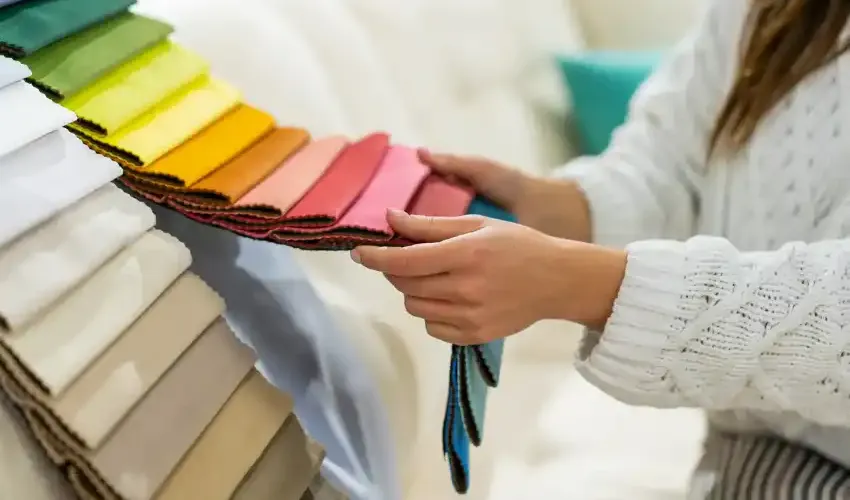
For interiors that want a softer, richer look, quality chenille and velvet options offer excellent durability without sacrificing style. If you’d like to see the full range of textures, colours and finishes, browse our Upholstery Fabric collection — our team can help match a fabric to your existing decor, sunlight exposure, and household needs before any cutting begins.
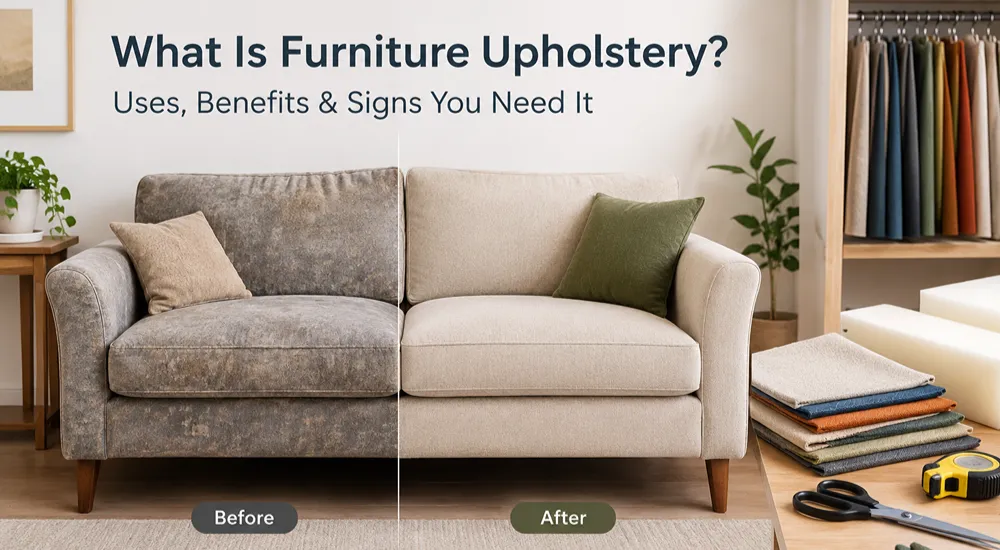
When Should You Reupholster Instead of Buying a New Sofa?
Reupholstering isn’t just a cheaper alternative to buying new furniture — in many cases, it’s the smarter choice altogether.
Cost savings are usually the first reason homeowners consider it. Reupholstering a solid, well-built frame is typically more affordable than buying an equivalent quality new sofa, especially for custom or imported pieces.
Sustainability matters too. Keeping an existing frame out of landfill and simply refreshing the fabric or leather has a much smaller environmental footprint than manufacturing a brand-new sofa.
It also lets you keep custom or hard-to-replace furniture — a sofa built to fit an unusual space, a family heirloom, or a piece with a frame quality you won’t find in mass-market furniture today.
Reupholstery is also a chance to improve comfort by replacing worn-out foam and update your interior’s colour palette or texture without replacing the entire piece.
If your sofa frame is still solid but the fabric or leather has seen better days, our Sofa Upholstery service handles everything from foam replacement to full material changeovers, so your sofa looks and feels new again.
How Our Upholstery Experts Help You Choose
Choosing between leather and fabric doesn’t have to be guesswork. Our consultation process is built to take the decision off your shoulders.
- Sofa inspection: We check the frame condition, foam quality and existing upholstery before recommending anything.
- Fabric recommendations: Based on your household, sunlight exposure and interior style, we suggest fabric types that will actually perform well.
- Leather recommendations: If leather suits your space better, we guide you through grade, tone and finish options within your budget.
- Foam replacement: Where needed, we replace worn foam to restore comfort and support, not just the outer material.
- Color matching: We help match new upholstery to your existing furniture, flooring and wall tones.
- Pickup and delivery: We arrange collection of your sofa and delivery once the work is complete.
- Professional installation: Every sofa is finished and fitted by experienced upholsterers, not assembled on a rush schedule.
Our craftsmen bring years of hands-on upholstery experience working across Dubai homes, villas, hotels and offices, so recommendations are based on what actually holds up here — not generic advice copied from cooler climates.
Conclusion: Making the Right Choice for Your Dubai Home
There is no universal winner in the leather vs fabric sofa upholstery debate. Leather offers a premium look, easy wipe-downs and strong longevity when cared for correctly. Fabric offers comfort, colour flexibility and often a lower price point, especially with today’s performance fabric options.
The right choice comes down to your household, budget, interior style and how the sofa will actually be used day to day. A quick conversation with an experienced upholsterer can save you from an expensive decision you’ll regret in a year or two.
As an experienced Upholstery Company in Dubai, we’re happy to inspect your sofa, walk you through leather and fabric options suited to your home, and handle the entire reupholstery process from start to finish. Contact Furnitureupholstery.ae today for a consultation and quote.